
My Stories Matter Redesign
Role
UI/UX Designer & Research
Duration
6 weeks
Tools
Figma, Figma Make, Photoshop
Team
Me
CONTEXT
My Stories Matter is an online platform in which users can write down memories, upload photos, add captions and submit their content in order to receive a printed book. While my main role lies in book design, graphic design and landing page design, as an independent initiative inspired by internal insights from my day-to-day book design and automation workflows. This was a self-initiated concept and was not officially implemented.
The task
How might we make it easier for users to organize their content so it's ready to be formatted into book?
REsearch
Organizing user feedback into actionable insights
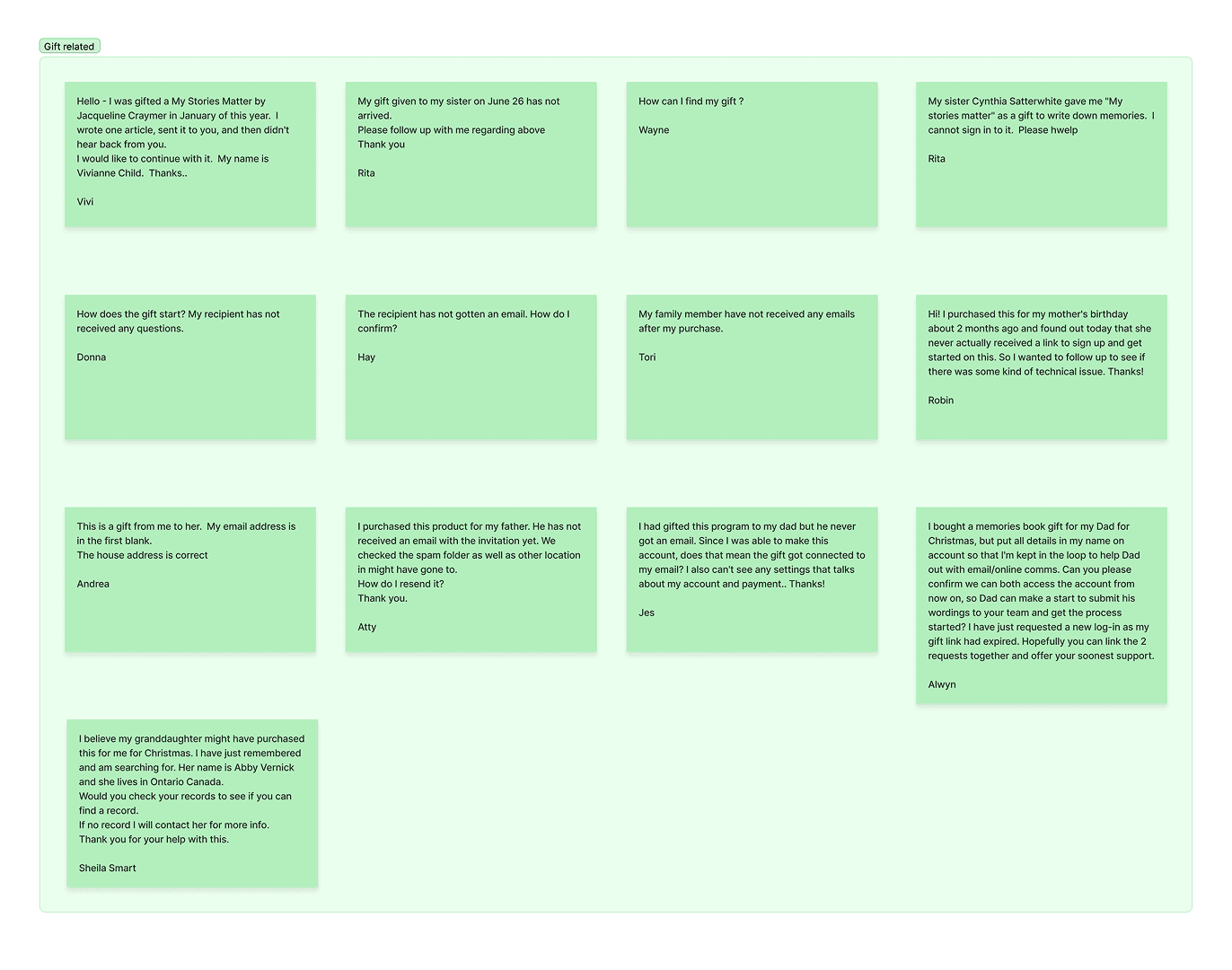
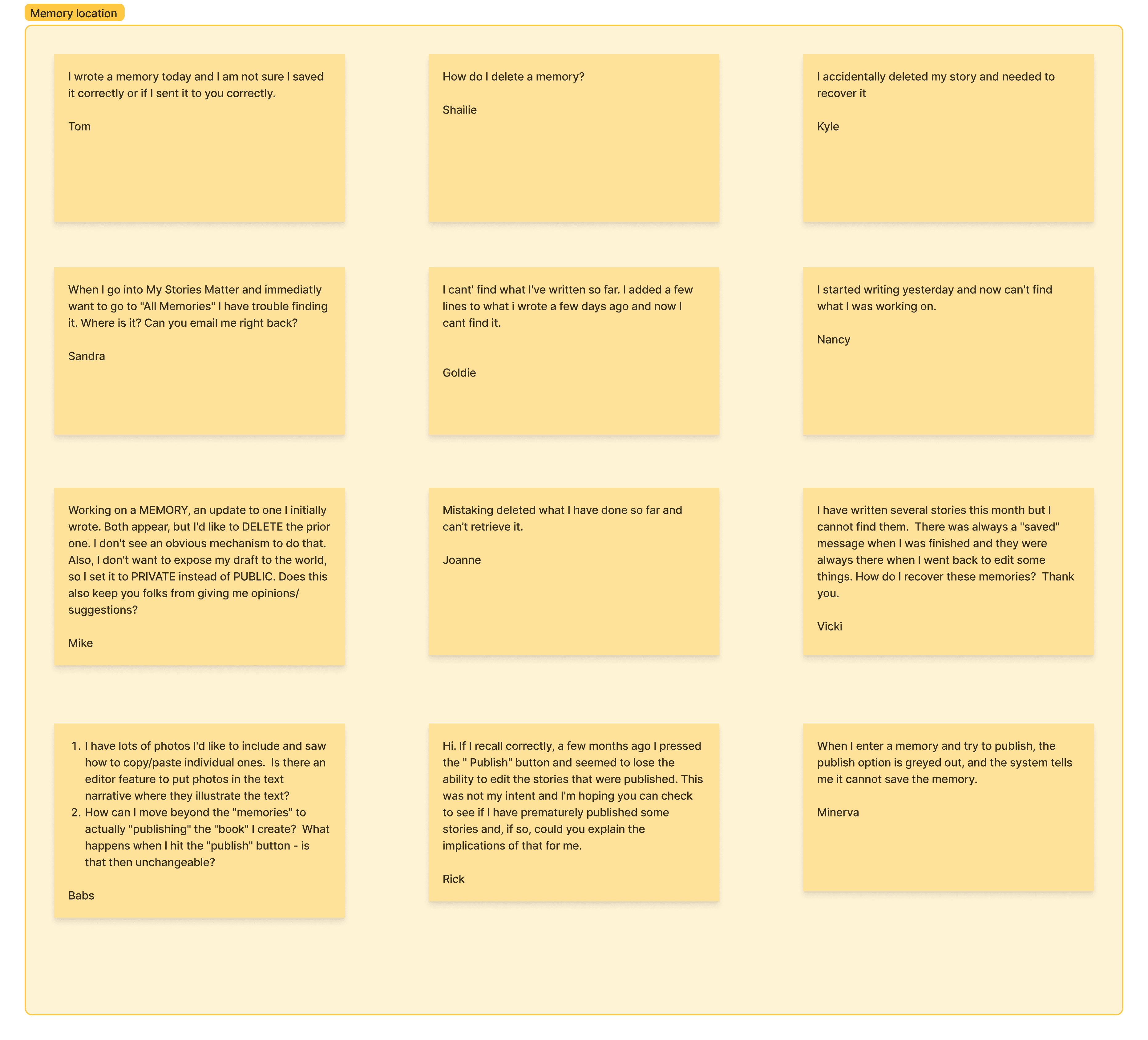
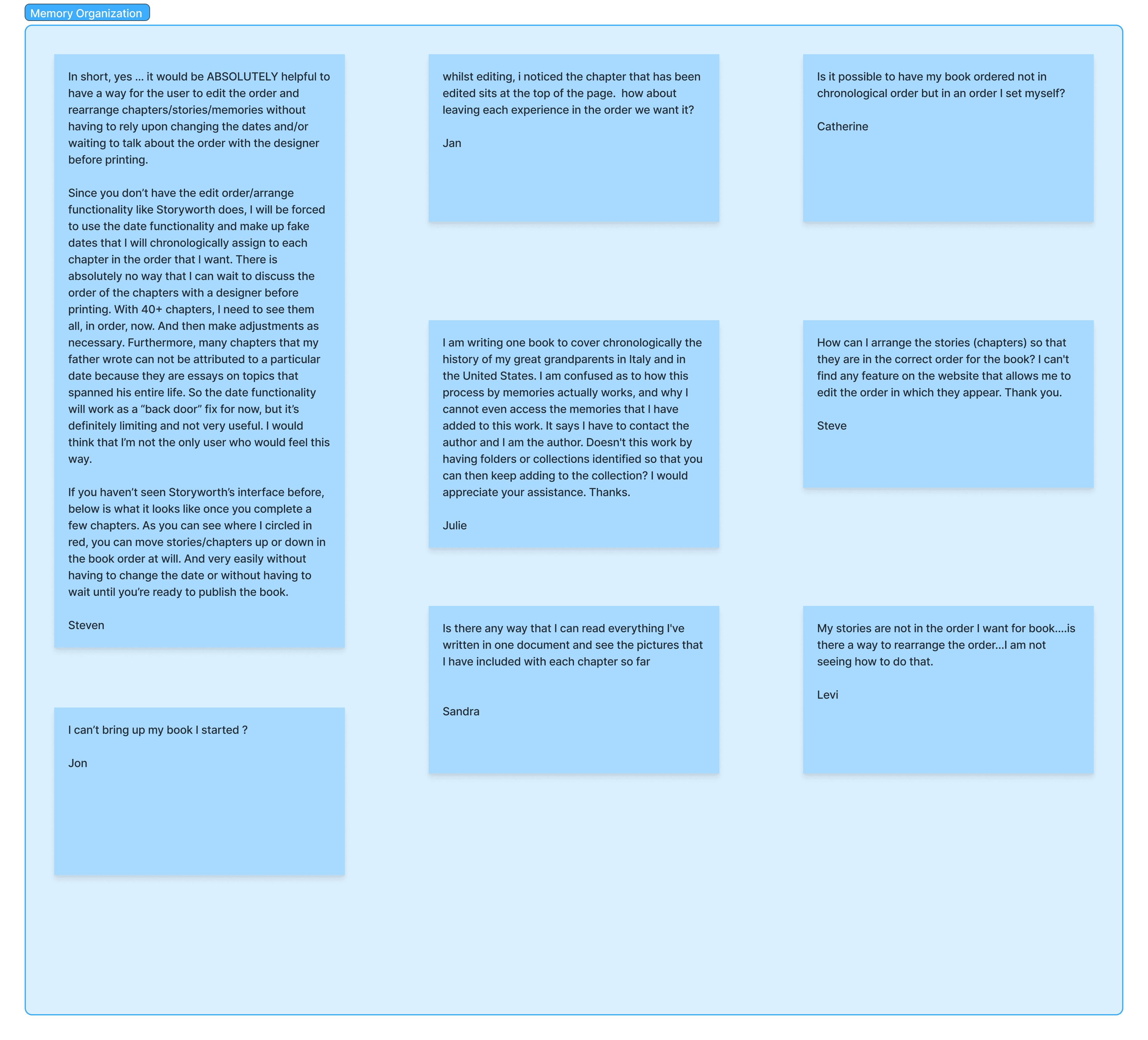
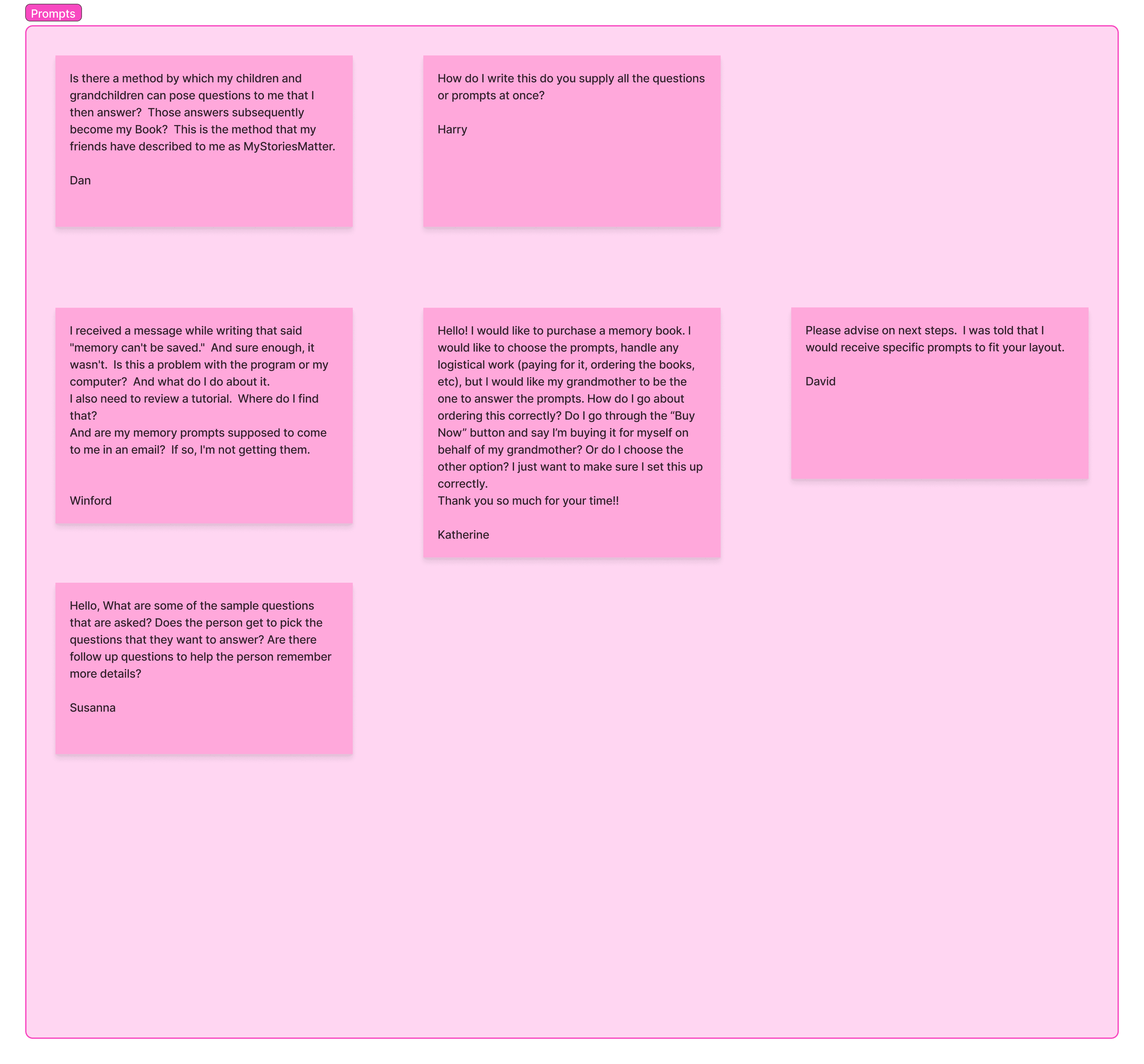
The team at My Stories Matter decided it was time for a redesign. I was tasked with collating existing user feedback. I went through linear and found all our support feedback and questions that we received from active and inquiring clients and began some affinity mapping.
I noticed that users frequently struggled with locating their memories and organizing their memories into chronological order the way chapters might be ordered.
Heuristic Audit
Analyzing our own site and competitors
I conducted a site audit based on some of the user feedback gathered, labeling and identifying confusing screens and flows.
what we learned
Many things!
While redesigning the site, I discovered that not only did the client's experience with the site and tools need to be smoother but the designers experience with the tools used to send and check revisions also had to be smoother.
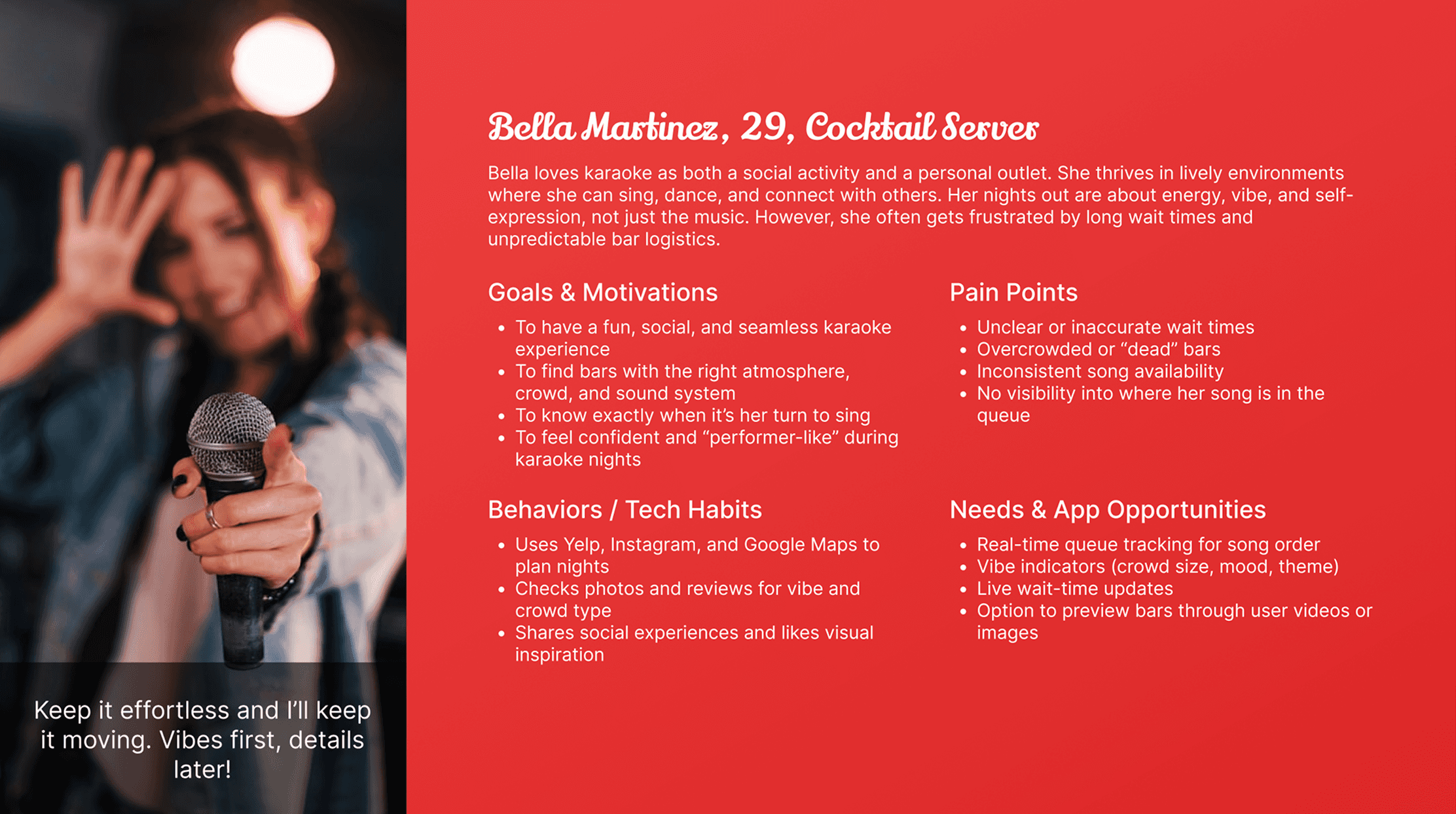
1. Wait times make or break the night.
Accurate bar info is rare.
Song selection transparency matters.
Vibe determines everything
Personas
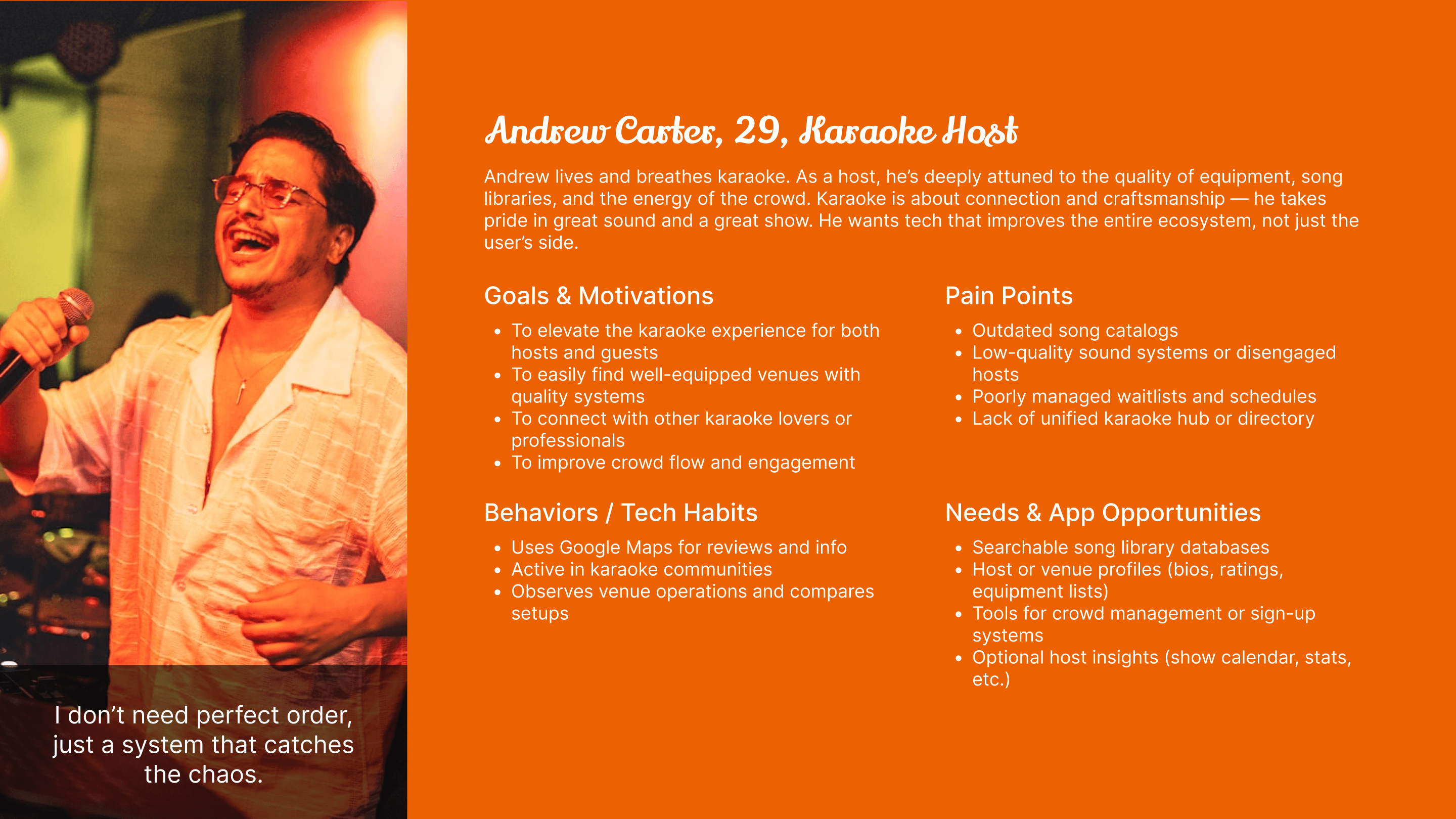
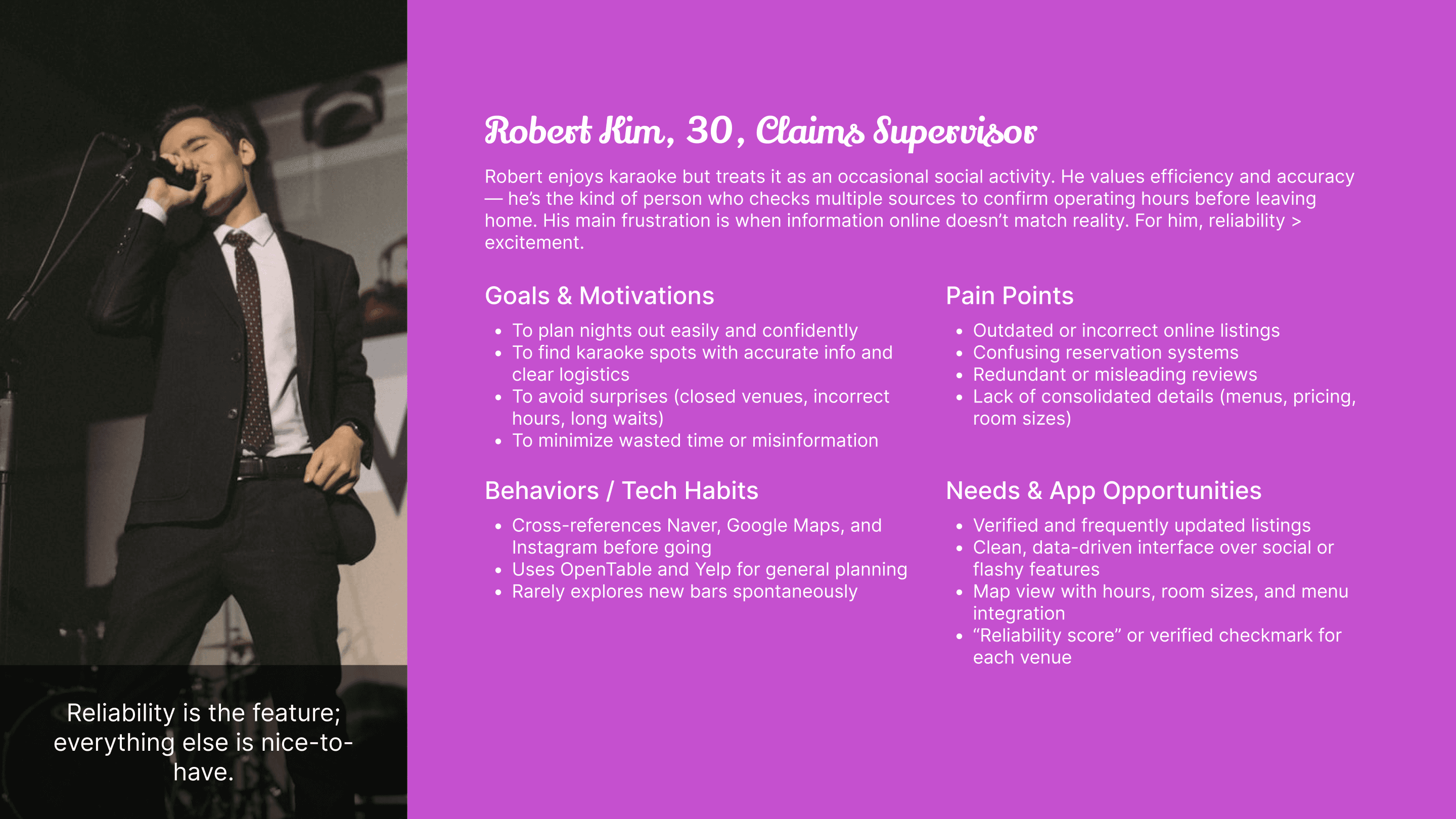
Gifters, authors and mature users
I discovered three primary personas to guide decisions.
Feature Prioritization
Users needed a simple way to organize their memories
CORE FEATURES
Real-time queue tracking
Song catalog search and request
Updated bar listings
Live wait-time indicators
Vibe previews (photos & videos)
Map + list view discovery
solutions
Before & Afters
Using research insights, I framed key opportunities:
How might we…
make karaoke bar discovery accurate and easy?
help users see when they’ll sing next?
highlight the vibe of each bar before users arrive?
simplify the sign-up process?
give hosts tools to manage the night?
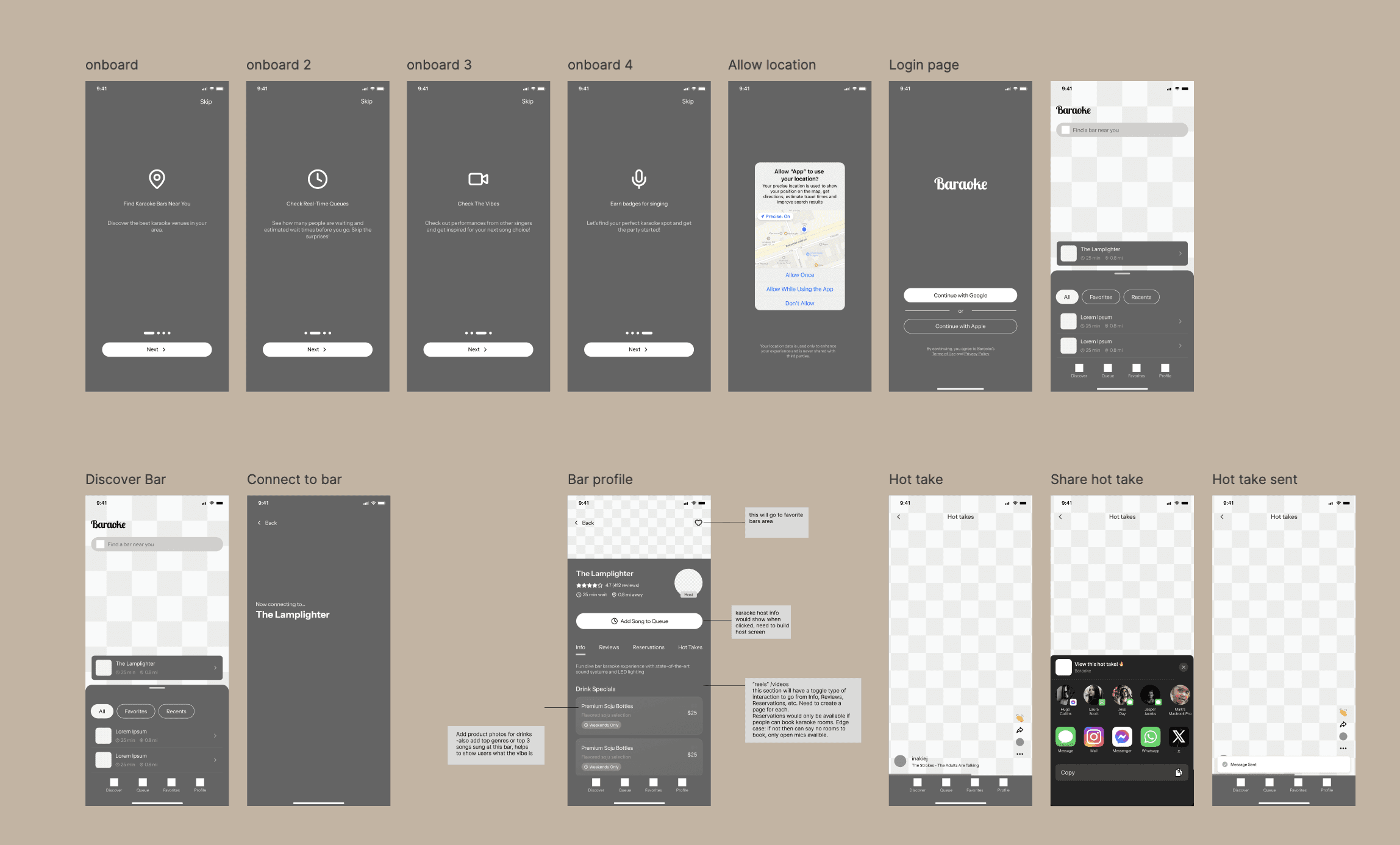
wireframing
Routing out the flow
I mapped out flows for both singers and hosts, covering:
onboarding
login
searching bars
connecting to a venue
adding songs
selecting vocal effects
purchasing credits
viewing profiles
sharing content
browsing the song queue
and ideated low-fidelity screens focusing on clarity, hierarchy, and iOS familiarity:
DESIGN SYTEM
Designing a bright, fun and vibey system
1. Utility-first UX
Users dislike social-heavy karaoke apps.
This design remains function-first.
2. Strong visual hierarchy
Information is grouped by:
what you need before arriving
what you need while singing
what you need after singing
3. Familiar patterns
Kept UI clean, dark, and minimal… inspired by music apps like Spotify or Apple Music.
4. Flexible navigation
Bottom tab bar supports:
Discovery
Search
Queue
Profile
REFLECTION
What I learned
1. Strategic Prioritization
Designing a comprehensive karaoke platform taught me the importance of a clear value proposition. While it was tempting to build an 'all-in-one' social and music discovery app, I learned to prioritize feature necessity over feature density. I shifted my focus to what was essential for the user experience, ensuring the core product remained concise and high-utility.
2. User-Centric Iteration
This project sharpened my ability to conduct purposeful user research. I moved beyond general questions and learned how to elicit actionable feedback that directly informed my design pivots, ensuring the final product solved real user pain points.
3. Systems Thinking & Logic
Developing a comprehensive design system from scratch was a cornerstone of this project. It pushed me to think beyond the 'happy path' and account for complex states, edge cases, and the underlying logic required to make a digital product functional and scalable.